How long is 520 centimetres?
Rather than leaving 520 centimetres as an abstract number, these examples translate it into familiar scale.
520-Centimetre Distance Comparisons
520 centimetres is about 1.4 times the diameter of the ESO 3.6-metre telescope.
Using the source measurement of 360 centimetres, this comparison puts the target at 1.4 of it.
Source: European Southern Observatory
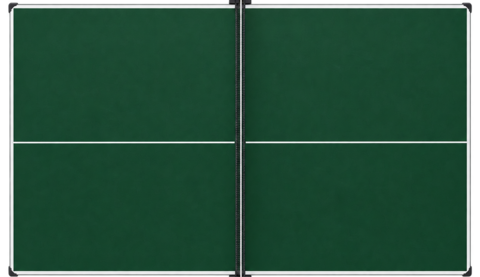
Measured against the length of a table-tennis table, 520 centimetres spans about 1.9 times that reference.
The comparison uses the published dimension, converted into the same unit before the proportion is calculated.
Measured against the length of an Airbus A321neo, 520 centimetres spans about 12% of that reference.
The comparison uses the published dimension, converted into the same unit before the proportion is calculated.
Source: Airbus
520 centimetres is about 8.8 times the short side of an A1 sheet.
The comparison uses the published dimension, converted into the same unit before the proportion is calculated.
Measured against the long side of an A2 sheet, 520 centimetres spans about 8.8 times that reference.
Its published measurement is 59.4 centimetres; the ratio is calculated from that figure.
520 centimetres is about 10% of the length of a long-course competition pool.
Its published measurement is 5,000 centimetres; the ratio is calculated from that figure.
Source: World Aquatics
For scale, 520 centimetres is about 10% of the height of the Arc de Triomphe.
Its published measurement is 5,060 centimetres; the ratio is calculated from that figure.
Source: Centre des monuments nationaux
520 centimetres is approximately 204.7 inches.
Using the exact conversion that 1 centimetre equals exactly 0.3937007874 inches, the unrounded result is 204.724 inches.
Reference measurements are rounded where appropriate, and naturally variable objects are described as approximate, typical, or maximum sizes.
