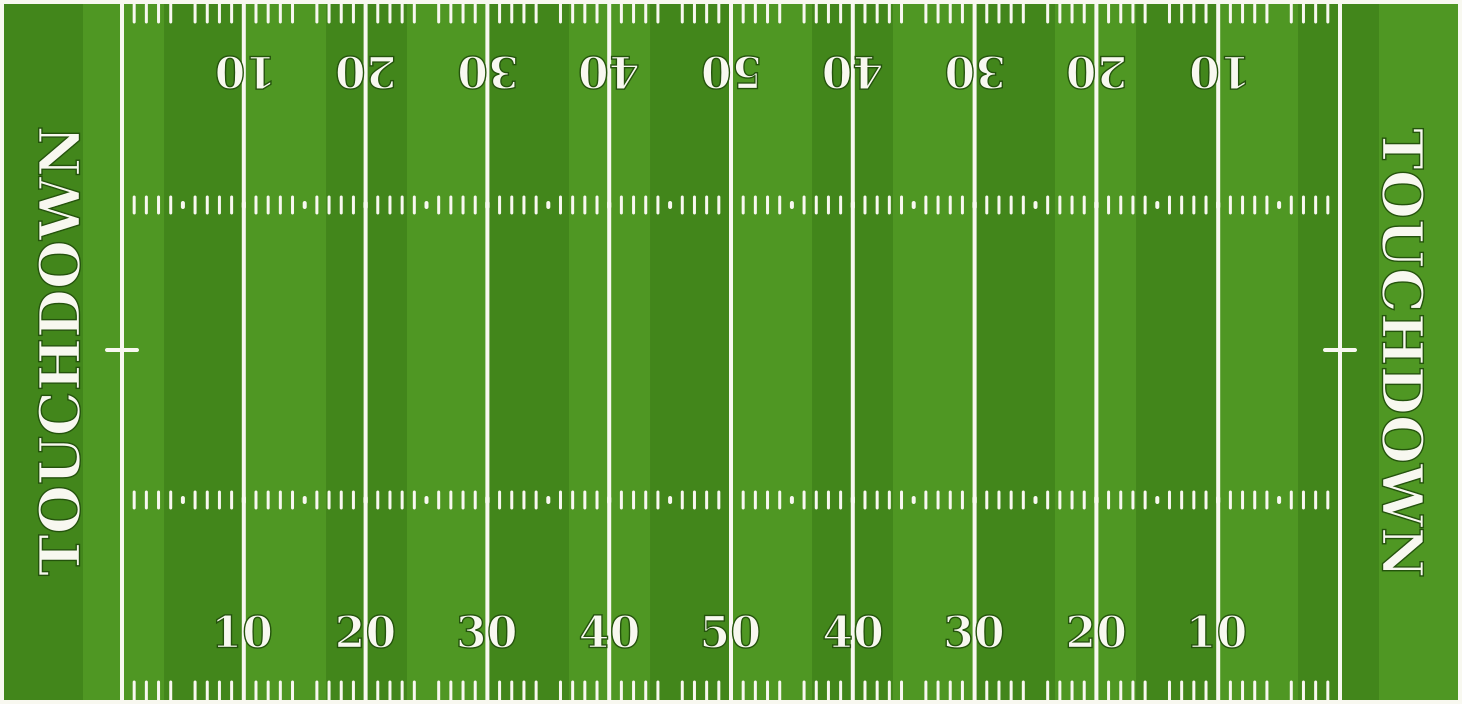
How long is 536 feet?
A useful way to understand 536 feet is to place it beside several familiar, independently measured reference points.
536-Foot Distance Comparisons
A 536-foot distance works out to about 41% of the one lap of a standard outdoor running track.
A standard outdoor athletics track measures 400 metres around lane one, equal to approximately 437.4 yards. At 1,312.33 feet, this familiar reference provides a direct scale comparison: the target distance covers 41% of that measurement.
Source: World Athletics
For scale, 536 feet spans about 10.3 times the maximum length of a sperm whale.
NOAA states that male sperm whales can grow to approximately 52 feet from head to tail. Its published measurement is 52 feet; the comparison comes from placing that figure against 536 feet.
Source: NOAA Fisheries
Picture the diameter of a full-size vinyl record: 536 feet is about 536 times its measured length.
The familiar long-playing record format uses a disc measuring approximately 12 inches across its diameter. Using its published size of 1 foot, dividing 536 by that reference gives 536 of those measurements.
Source: Library of Congress
Compared with the wingspan of the Wright Flyer, 536 feet is about 13.2 times that measurement.
The Smithsonian records the 1903 Wright Flyer with a wingspan measuring approximately 40 feet 7 inches. Its published measurement is 40.57 feet; the comparison comes from placing that figure against 536 feet.
For scale, 536 feet spans about 3.3 times the height of the Arc de Triomphe.
Paris's Arc de Triomphe rises approximately 164 feet above the center of Place Charles de Gaulle. The source measurement converts to 164 feet, so the proportional comparison with 536 feet is 3.3 of those measurements.
Source: Centre des monuments nationaux
Compared with the solar-array span of the International Space Station, 536 feet is about 2.2 times that measurement.
With its solar arrays extended, the International Space Station spans approximately 239 feet across its width. The source measurement converts to 239 feet, so the proportional comparison with 536 feet is 2.2 of those measurements.
Source: NASA
For scale, 536 feet spans about 85% of the height of the Gateway Arch.
St. Louis's stainless-steel Gateway Arch stands 630 feet high and spans the same distance between its outer legs at ground level. Its published measurement is 630 feet; the comparison comes from placing that figure against 536 feet.
Source: National Park Service
536 feet is approximately 163.4 meters.
Using the exact conversion that 1 foot equals exactly 0.3048 meters, the unrounded result is 163.373 meters.
Reference measurements are rounded where appropriate, and naturally variable objects are described as approximate, typical, or maximum sizes.
