How long is 977 feet?
977 feet can be easier to picture when it is measured against objects, animals, vehicles, sports spaces, and landmarks people already recognize.
977-Foot Distance Comparisons
Measured against the maximum recorded length of a giant squid, 977 feet is about 22.7 times that reference length.
Smithsonian Ocean reports that the largest giant squid records reach approximately 43 feet in total length. At 43 feet, this familiar reference provides a direct scale comparison: the target distance covers 22.7 of those measurements.
Source: Smithsonian Ocean
A 977-foot distance works out to about 24.1 times the wingspan of the Wright Flyer.
The Smithsonian records the 1903 Wright Flyer with a wingspan measuring approximately 40 feet 7 inches. At 40.57 feet, this familiar reference provides a direct scale comparison: the target distance covers 24.1 of those measurements.
977 feet is about 5.7 times the height of Horseshoe Falls.
Niagara Parks lists the vertical height of Horseshoe Falls at approximately 170 feet above the river below. The source measurement converts to 170 feet, so the proportional comparison with 977 feet is 5.7 of those measurements.
Source: Niagara Parks
Measured against the solar-array span of the International Space Station, 977 feet is about 4.1 times that reference length.
With its solar arrays extended, the International Space Station spans approximately 239 feet across its width. Using its published size of 239 feet, dividing 977 by that reference gives 4.1 of those measurements.
Source: NASA
977 feet is about 147 times the minimum accessible doorway headroom.
U.S. accessibility guidance uses 80 inches as the minimum unobstructed vertical clearance along circulation paths and through most doorways. Its published measurement is 6.67 feet; the comparison comes from placing that figure against 977 feet.
Source: U.S. Access Board
Picture the one lap of a standard outdoor running track: 977 feet is about 74% of its measured length.
A standard outdoor athletics track measures 400 metres around lane one, equal to approximately 437.4 yards. At 1,312.33 feet, this familiar reference provides a direct scale comparison: the target distance covers 74% of that measurement.
Source: World Athletics
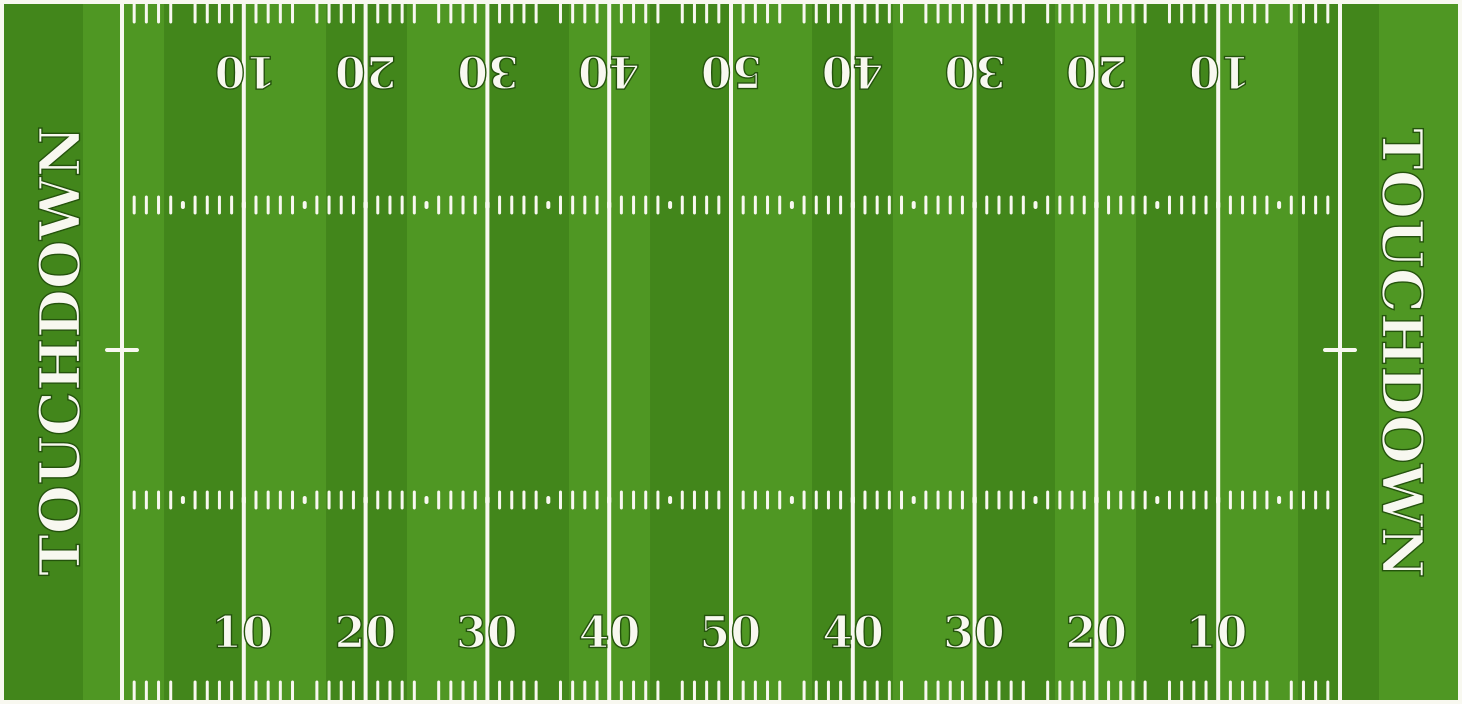
A 977-foot distance works out to about 32.6 times the depth of an NFL end zone.
Each NFL end zone extends 10 yards, or 30 feet, beyond its adjacent goal line. Using its published size of 30 feet, dividing 977 by that reference gives 32.6 of those measurements.
Source: National Football League
977 feet is approximately 297.8 meters.
Using the exact conversion that 1 foot equals exactly 0.3048 meters, the unrounded result is 297.79 meters.
Reference measurements are rounded where appropriate, and naturally variable objects are described as approximate, typical, or maximum sizes.
