How long is 517 centimetres?
The sourced comparisons below place 517 centimetres alongside recognizable real-world dimensions from several categories.
517-Centimetre Distance Comparisons
Measured against the diameter of the ESO 3.6-metre telescope, 517 centimetres spans about 1.4 times that reference.
Using the source measurement of 360 centimetres, this comparison puts the target at 1.4 of it.
Source: European Southern Observatory
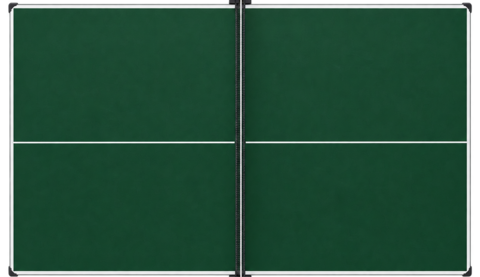
For scale, 517 centimetres is about 1.9 times the length of a table-tennis table.
Using the source measurement of 274 centimetres, this comparison puts the target at 1.9 of it.
Measured against the depth of a football goal area, 517 centimetres spans almost exactly the same distance as that reference.
The comparison uses the published dimension, converted into the same unit before the proportion is calculated.
Source: FIFA
517 centimetres is about 1.7 times the height of a regulation basketball rim.
Using the source measurement of 305 centimetres, this comparison puts the target at 1.7 of it.
Source: FIBA
For scale, 517 centimetres is about 2.1 times the height of a full-size football goal.
Its published measurement is 244 centimetres; the ratio is calculated from that figure.
Source: FIFA
For scale, 517 centimetres is about 3.4 times the width of a table-tennis table.
Using the source measurement of 152.5 centimetres, this comparison puts the target at 3.4 of it.
517 centimetres is about 3.4 times the height of a badminton net at centre.
Its published measurement is 152.4 centimetres; the ratio is calculated from that figure.
Source: Badminton World Federation
517 centimetres is approximately 203.5 inches.
Using the exact conversion that 1 centimetre equals exactly 0.3937007874 inches, the unrounded result is 203.543 inches.
Reference measurements are rounded where appropriate, and naturally variable objects are described as approximate, typical, or maximum sizes.
